Plywood Buying Guide 2026: How to Choose the Right Grade for Your Home
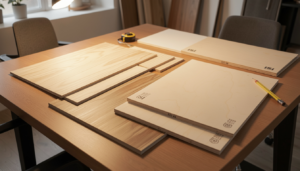
When designing your dream home, it’s easy to get carried away by stunning laminates, glossy finishes, and elegant veneers. But even the most beautiful surfaces can fail if the plywood underneath isn’t chosen wisely. In humid zones or termite-prone regions, the wrong plywood can warp, bubble, or decay—ruining your aesthetic investment and structural stability. This guide helps you make smart choices backed by industry standards and on-site experience.
Understanding Plywood Grades: The Basics
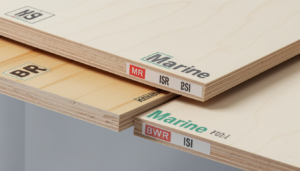
Before you compare designs or finishes, you must understand what plywood grades really mean. The Bureau of Indian Standards (BIS) classifies plywood using specific IS codes that indicate its quality, strength, and resistance to moisture. For example, IS 303 covers commercial MR (Moisture Resistant) plywood, while IS 710 regulates Marine Grade plywood built to withstand heavy water exposure. These IS codes ensure you know exactly what performance level to expect from the sheet you choose—whether it’s for kitchen cabinets, wardrobes, or outdoor structures.
What is IS:303 Plywood? (MR & BWR Grades)
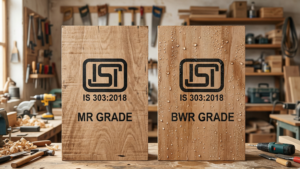
IS:303 is the Indian Standard code for Commercial Plywood, one of the most widely used materials in residential interiors. It’s engineered for strength and durability in everyday conditions, but it’s essential to pick the right variant—Moisture Resistant (MR) or Boiling Water Resistant (BWR)—based on where it will be used. Both share the same base standard yet serve different environmental needs.
Moisture Resistant (MR)
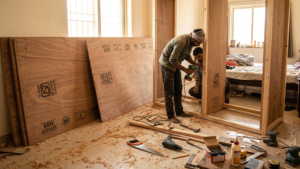
MR plywood, often called “Commercial Ply,” withstands limited exposure to moisture but is not waterproof. It performs well in dry zones and controlled indoor environments where humidity levels stay moderate. Using it in wet areas like kitchens or bathrooms may lead to delamination or warping over time.
Best applications:
- Bedroom wardrobes and study tables
- TV units, wall paneling, and partitions
- False ceilings, dry storage cabinets, and decorative furniture
Boiling Water Resistant (BWR)
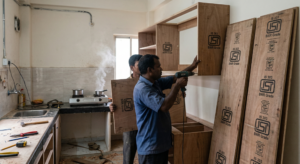
BWR plywood is a tougher grade under IS:303, designed to resist high humidity and occasional water contact. Its bonding adhesive is phenol-formaldehyde, giving it superior strength in semi-wet conditions. However, it’s still not suited for areas with constant water immersion like marine or exterior use.
Best applications:
- Kitchen cabinets and under-sink units
- Bathroom vanity areas with limited splash exposure
- Balconies, service areas, and semi-open storage zones
What is IS:710 Plywood? (BWP Grade)
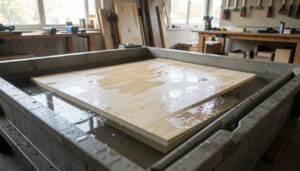
IS:710 certified plywood is commonly known as Boiling Water Proof (BWP) or Marine Grade Plywood. It’s engineered to endure continuous exposure to water without swelling, warping, or delaminating—qualities that make it the strongest among residential-use plywoods. This durability comes from its superior glue line bonding with phenolic resin, which remains stable even in extreme humidity and heat.
BWP plywood is the go-to choice for spaces where water contact is unavoidable or long-term moisture is common. It offers excellent performance in both household and semi-commercial wet environments, ensuring structural integrity for years.
Best applications:
- Modular kitchen carcasses and under-sink storage
- Bathroom vanities, utility rooms, and laundry counters
- Outdoor furniture, balconies, and wash areas
IS:303 vs IS:710: Which is the Best Plywood for Home?
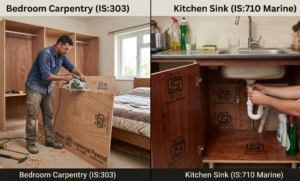
When comparing IS:303 vs IS:710, homeowners often assume the costliest option is automatically the best—but that’s not true. The real trick lies in matching the plywood grade with its environment and purpose to balance budget and longevity. IS:303 plywood works perfectly for dry, decorative spaces like wardrobes and wall panels, while IS:710 is essential where water exposure is continuous or unavoidable.
Think of it this way: you wouldn’t need marine-grade strength for a living room bookshelf, but you’d regret skipping it under a kitchen sink. Using the right grade in each space ensures durability without overspending. It’s about choosing smart, location-specific materials—exactly how professionals design interiors built to last.
Your Room-by-Room Plywood Selection Guide
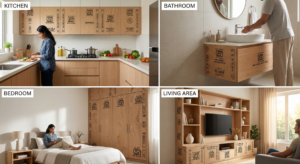
Choosing the best plywood for home comes down to using each grade precisely where it performs best. Here’s a straightforward guide to help homeowners make reliable, cost-effective choices across all rooms:
- Modular Kitchens (Base Cabinets):
Use IS:710 BWP plywood — waterproof and built for heavy moisture under sinks and countertops. - Modular Kitchens (Wall Cabinets):
Opt for IS:303 BWR plywood, which handles steam and humidity without warping. - Bathroom Vanities:
Always pick IS:710 BWP plywood — long-lasting even in splash zones and humid conditions. - Bedroom Wardrobes & Beds:
Choose IS:303 MR plywood — ideal for dry interiors, sturdy yet cost-efficient. - Living Room Furniture & Wall Paneling:
Go for IS:303 MR plywood, providing smooth finishing and stability in low-moisture spaces.
Utility & Laundry Areas:
Combine IS:710 BWP plywood for wet zones and IS:303 BWR plywood for semi-dry storage areas.
Conclusion
Investing in the right plywood grade is more than a material choice—it’s a safeguard against costly repairs and premature damage. The right foundation ensures your interiors stay strong, beautiful, and resistant to moisture or wear for decades. To build a home that looks stunning and lasts just as long, book a consultation with our interior design and construction team today. We’ll guide you in choosing top-tier materials and expert craftsmanship—so your dream home stands solid from the inside out.